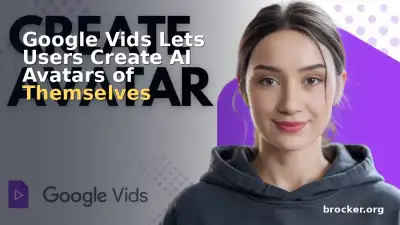
Google is expanding Google Vids with personal AI avatars that can look and sound like the account holder. According to TechCrunch, users will be able to create a digital presenter from a selfie and a voice recording, then use that avatar in AI-generated videos.
The update also brings Google’s multimodal Gemini Omni model to Vids. The feature is intended to move Vids beyond a workplace presentation tool and toward a broader AI-assisted video creation platform.
What’s new in Google Vids
The headline feature is a personal avatar tied to the user’s own likeness. Rather than selecting a preset presenter or designing a fictional branded avatar, eligible users can upload a selfie and voice recording to create a digital version of themselves.
- Personal avatars are created from a selfie and voice recording.
- The avatar is tied to the account holder’s Google account and likeness.
- Google says generated avatars will carry an invisible SynthID watermark.
- Access is limited to users aged 18 or older in selected regions.
These restrictions matter because the feature handles a person’s face and voice, two of the most sensitive inputs in generative media. Account binding, age limits, regional availability, and watermarking are intended to make misuse harder than with open-ended celebrity or public-figure generation tools.
Gemini Omni adds multimodal video editing
Google is also bringing Gemini Omni to Vids. The model can use a written prompt together with reference images uploaded by the user, then combine those inputs into a generated video.
TechCrunch reports that Gemini Omni can also help with editing tasks such as changing a background, correcting lighting in phone-recorded footage, and adding effects. This makes the tool more flexible than a script-to-avatar workflow, where the main task is simply choosing a narrator and generating a spoken video.
How it fits into Google’s Vids strategy
Google Vids already includes AI avatars, AI voiceovers, video generation, and integrations with Google Slides. Google has also expanded custom-avatar controls, allowing users to direct avatars to act in scenes, interact with objects, and preserve a consistent appearance and voice across generated clips.
Google Workspace says Vids has more than 7 million monthly users. Its focus remains workplace communication, including training, product demonstrations, sales pitches, and internal updates, but personal avatars could make those videos feel less generic without requiring a camera setup or a reshoot.
Why it matters
Personal AI avatars are becoming a major feature category for business video tools. They can reduce the time required to record repeatable messages, localise communications, and update training materials. At the same time, they raise obvious questions around identity, consent, and synthetic media.
Google’s use of account-linked avatars and SynthID watermarking is a meaningful design choice, but watermarking alone is not a complete answer to misuse. The effectiveness of the feature will depend on how Google verifies the original user, enforces access controls, and responds to attempts to bypass those safeguards.
Our take
The most interesting part of this update is not simply that Vids can create an avatar. It is the combination of identity-based avatars with Gemini Omni’s prompt-and-reference-image workflow. That could make Google Vids useful for teams that need repeatable product demos or internal videos but do not want every update to require a recording session.
Google is making a more cautious product choice than platforms that have allowed broad public-figure generation. Keeping avatars tied to the account holder’s likeness, using SynthID, and limiting access by age and region are sensible safeguards. Their real value will depend on enforcement as the feature rolls out.
FAQ
How does Google Vids create a personal AI avatar?
According to TechCrunch, a user uploads a selfie and a voice recording. Google Vids then creates a digital avatar designed to look and sound like that user.
Who can use personal avatars in Google Vids?
Google says the feature is limited to users aged 18 or older in selected regions. Availability may expand over time.
What is Gemini Omni in Google Vids?
Gemini Omni is Google’s multimodal AI model for Vids. It can combine written prompts with reference images to help generate or edit videos.
Will Google Vids watermark personal AI avatars?
Google says personal avatars will include an invisible SynthID watermark and remain linked to the account holder’s likeness and Google account.
Can Google Vids avatars be used for business videos?
Yes. Google positions Vids for workplace uses such as training, product demonstrations, internal updates, and sales presentations.