
OpenAI has rolled out an upgraded prompt caching system for its GPT-6 model family that extends the reuse window for shared context prefixes to 30 minutes and adds developer tooling to monitor and optimize cache performance. The company says the changes deliver higher cache hit rates by default and can reduce input token costs by up to 90% for eligible cached prefixes.
The update targets persistent agent workloads — applications that make a series of API requests carrying forward the same instructions, tool definitions, and context across hours-long tasks such as codebase refactoring or document production. By caching the shared prefix of those requests, OpenAI reuses computation across calls, cutting latency and cost.
Confirmed
- GPT-6 models now grant cache discounts for eligible shared prefixes reused within a 30-minute window.
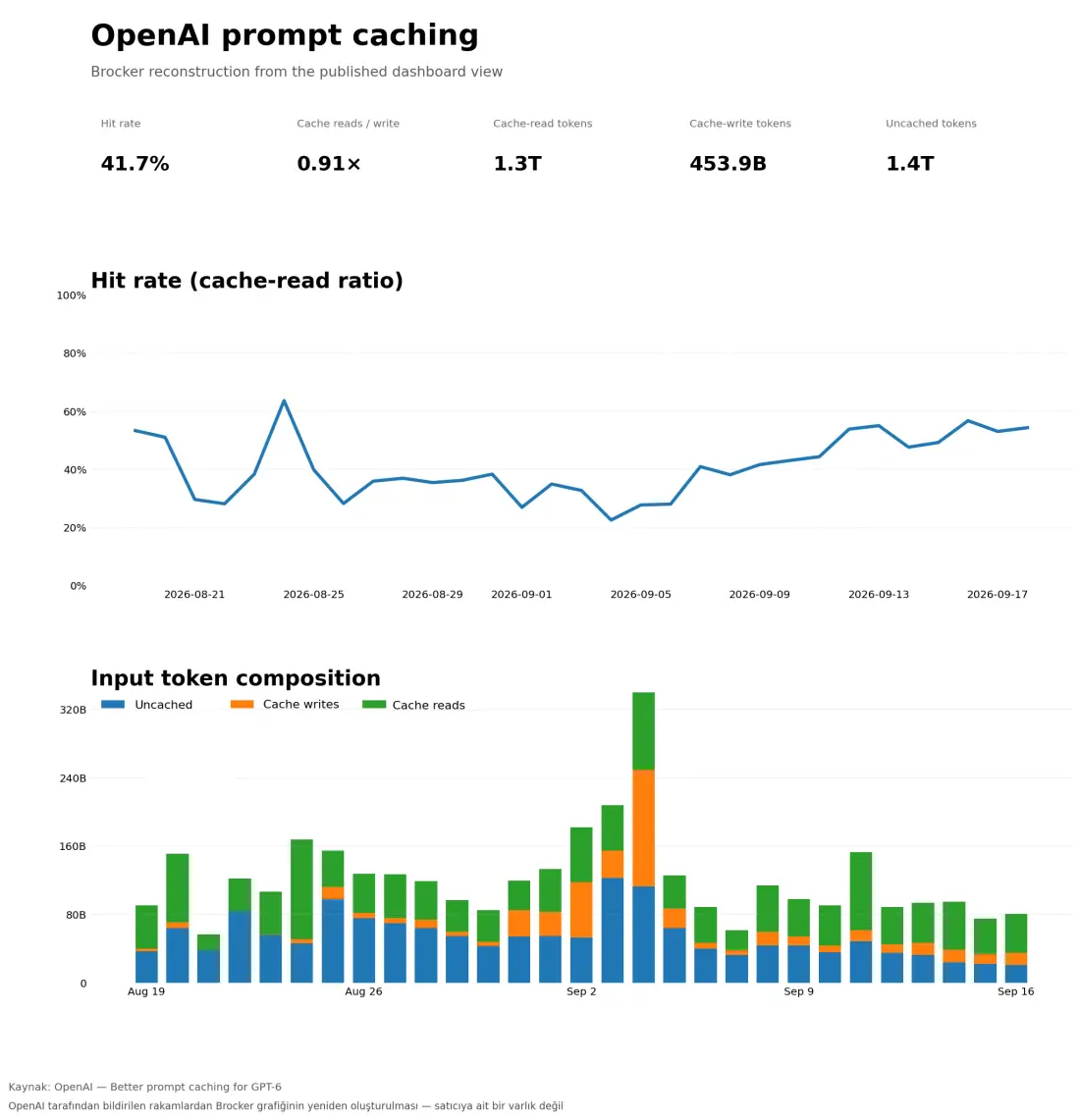
- A new Prompt Caching Dashboard at platform.openai.com/usage?usage_section=prompt-caching tracks hit rates over time and charts cached versus uncached input tokens, while a diagnostics tool at developers.openai.com/api/docs/guides/prompt-caching/diagnostics compares a request with a recent response to explain a cache miss and estimates the number of affected tokens.
- Explicit cache breakpoints let developers choose which prompt prefixes to reuse; the refreshed prompt caching guide documents how long cached prefixes remain eligible and how tool or input changes affect reuse.
- On GPT-6, reasoning effort can now be adjusted between responses via a configuration_update without breaking cache, allowing harder or lighter reasoning while preserving reusable context.
- The guide also recommends keeping tool definitions, schemas, and ordering stable; using allowed_tools or tool_choice: none instead of removing definitions; appending new instructions via developer messages; and prewarming known context during application startup so the first user request does not absorb that processing.
Unknown
- Whether the 30-minute reuse window applies uniformly across all GPT-6 variants or differs by model tier.
- Exact pricing for cached versus uncached input tokens under the new system (the post cites "up to 90%" discounts but does not publish a rate card).
- Independent replication of the claimed hit-rate improvements and latency reductions.
- Rollout scope: whether the dashboard and diagnostics tools are available to all developers immediately or gated by usage tier.
- Whether cache prewarming incurs any separate cost or quota impact.
Our take
The 30-minute window is a practical expansion for agent workflows that naturally pause between steps, but the real leverage comes from the diagnostics tool — turning cache misses from a silent cost leak into an observable, optimizable signal. Developers who treat prompt structure as an engineering discipline (stable tool schemas, append-only instruction updates, explicit breakpoints) will capture most of the savings; those who don't will still pay full price for repeated context.