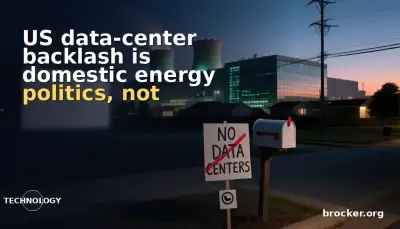
OpenAI disclosed in June 2026 that it banned two likely China-origin ChatGPT account clusters running covert influence operations on US AI debates. The first, dubbed "Data Center Bandwagon," generated social content claiming AI data-center buildouts raise household electricity prices. OpenAI said the operators exploited existing public concerns but found no evidence of meaningful breakout or shifted public opinion.
A Heatmap Pro poll conducted by Embold Research from August 8–13, 2026 (n=2,045 registered voters, ±2.3 pp) shows the backlash is real and overwhelmingly domestic: roughly 75% of Americans would oppose a data center near where they live, more than 60% strongly oppose, and only about 4% strongly support local buildouts. That opposition has swung 33 points in 12 months across every demographic and partisan cohort.
Confirmed
- OpenAI threat report (June 2026): two PRC-linked ChatGPT clusters banned; "Data Center Bandwagon" pushed electricity-price narratives; OpenAI states no evidence of meaningful breakout or opinion shift. openai.com
- Heatmap Pro / Embold Research poll (Aug 8–13, 2026): ~75% oppose local data centers; >60% strongly oppose; ~4% strongly support; 33-point swing since August 2025. heatmap.news
- Clemson Media Forensics Hub co-director Darren Linvill: among X-flagged anti-data-center accounts, at least ~59 had zero engagement; #capacityauction hashtag ~90 posts in January; Linvill called it a non-story with little real human reach. businessinsider.com
Analysis
Two facts sit side by side: a foreign influence operation tested anti-data-center narratives, and a massive domestic opposition movement exists. Conflating them is a category error. OpenAI's own framing is explicit — the operators latched onto pre-existing ratepayer anger over electricity prices and local impacts. The Heatmap trend line (even split → 75% opposed in one year) moves far faster and broader than any documented bot farm reach. Linvill's sample of X-flagged accounts showed near-zero human engagement, and the #capacityauction hashtag barely registered. X's later disclosure of a ~200k-account bot farm with ~200 accounts posting on AI/energy does not, on its own, explain a 33-point national swing.
What explains it? PJM capacity-market mechanics driving up residential bills, water-use disputes in Arizona and Texas, noise and land-use fights in Virginia's "Data Center Alley," and a visible buildout pace that outstripped local planning. Politicians from both parties — Wisconsin gubernatorial candidates, New York Governor Kathy Hochul (one-year moratorium), Texas Governor Greg Abbott (audit freeze) — are responding to voter pressure. More than 530 counties and municipalities have restricted or banned construction, per Heatmap Pro data.
Unknown
- Whether any China-linked activity caused measurable shifts in polls or local permitting fights.
- Full reach of the ~200 accounts X flagged beyond Linvill's sampled subset.
- How much of electricity-price anger is PJM/capacity-market mechanics vs. "AI" branding.
- Graphika's full methodology if only secondary quotes appear — no independent Graphika report URL is confirmed here.
Our take
For AI-factory builders and readers, the bill that matters is grid capacity, water, and local politics — not a China bogeyman label. Same unit of narrative ≠ same impact: bot farms that never reach humans do not explain a 33-point swing in Heatmap's own trend. Influence ops that latch onto real ratepayer pain are a threat-intel footnote; treating local opposition as foreign by default is a category error.