
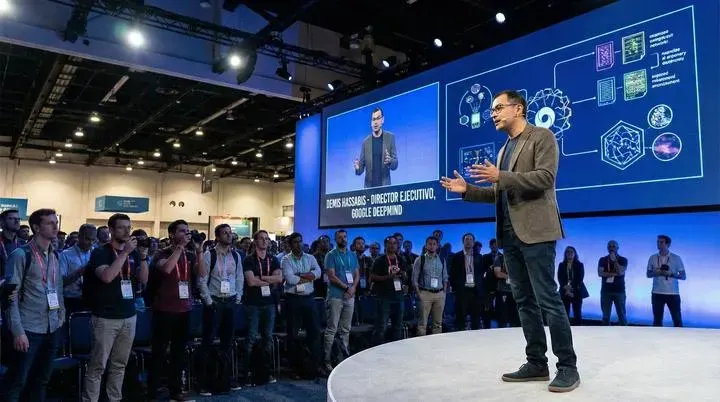
Google DeepMind CEO Demis Hassabis is calling for a new kind of international AI watchdog, one that could evaluate the most powerful frontier models before they are released to the public.
The proposal comes at a time when AI systems are improving quickly in reasoning, coding, multimodal understanding, and autonomous task execution. As the technology becomes more capable, the question is no longer only who can build the best model. It is also who should check that the model is safe enough to deploy.
A proposal for frontier AI oversight
Hassabis is not simply calling for another broad technology regulator. His idea focuses on frontier AI: the most advanced systems being developed by leading laboratories.
The proposed organization would evaluate models before public release, run standardized safety tests, identify serious risks, and help coordinate responses if dangerous capabilities appear.
That could include cybersecurity risks, biological misuse, national security concerns, and questions around increasingly autonomous systems.
Why this debate is happening now
The AI industry has entered a highly competitive period. Google DeepMind, OpenAI, Anthropic, Meta, xAI, and several Chinese labs are investing heavily in more capable foundation models.
Each major release brings better reasoning, stronger coding ability, broader context windows, and more advanced tool use. Those improvements create enormous opportunities, but they also raise harder safety questions.
If a future model can discover software vulnerabilities, automate parts of cyber operations, or assist with sensitive scientific research, governments may want to understand those capabilities before the system is widely available.
What a standards body could do
A specialized frontier AI body could create common evaluation procedures across companies. That matters because today, safety testing is often fragmented between internal company reviews, voluntary commitments, and national regulations that differ from one country to another.
Supporters argue that independent testing would improve trust and give governments a clearer view of emerging risks. Critics worry that mandatory reviews could slow innovation, create political disputes, or give the largest AI companies an advantage because they are better equipped to handle complex compliance demands.
The international challenge
AI development is global. Any serious oversight system would need cooperation between countries with different laws, economic priorities, and security concerns.
Open-source models add another complication. Once powerful model weights are widely distributed, it becomes much harder to enforce consistent standards. That does not make oversight impossible, but it does mean the system would need to focus on practical coordination rather than simple control.

Why it matters for the AI industry
The proposal reflects a major shift in the public conversation around AI. A few years ago, most attention was on model performance. Today, governance, accountability, safety testing, and deployment rules are becoming central issues.
For AI companies, this means trust may become as important as technical capability. Businesses, governments, and users want powerful systems, but they also want evidence that those systems have been evaluated responsibly.
Our take
A global AI watchdog would be difficult to build, but the underlying concern is real. Frontier models are becoming too important for safety testing to remain entirely inside individual companies.
The hardest questions are political rather than technical: who leads the body, who trusts it, what authority it has, and how it handles competition between countries. Even if this exact proposal never becomes reality, the direction of travel is clear. AI governance is moving from theory into infrastructure.
Frequently asked questions
What is a frontier AI model?
A frontier AI model is an advanced system at the edge of current AI capabilities, often involving strong reasoning, coding, multimodal understanding, or autonomous tool use.
Why does Demis Hassabis want a global AI watchdog?
He argues that the most powerful AI models may need independent safety evaluation before release because of potential cybersecurity, biological, and national security risks.
Would this regulate every AI product?
No. The proposal is mainly focused on frontier models from leading AI laboratories, not ordinary consumer apps or simple automation tools.
Sources
- Axios interview with Demis Hassabis
- The Verge coverage of the proposal
- Financial Times reporting on AI regulation