OpenAI has announced GPT-5.6 alongside ChatGPT Work, a new AI assistant designed to help users complete tasks across connected apps and services. The release is less about a single model upgrade and more about where AI products are heading next.
The message is clear: AI systems are moving from chat windows toward tools that can plan, organize, write, code, summarize, and act inside everyday workflows.
A new model family
GPT-5.6 introduces three models aimed at different needs. Sol is positioned as the most capable option for complex reasoning, software engineering, cybersecurity, research, and advanced knowledge work.
Terra is designed to balance performance and cost for business use, while Luna focuses on speed and affordability for lighter workloads. That structure gives companies more flexibility when choosing how much intelligence, speed, and cost efficiency they need.

ChatGPT Work is the bigger signal
The most interesting part of the announcement may be ChatGPT Work. Instead of only responding to questions, the product is designed to work across connected services such as cloud storage, email, collaboration platforms, and productivity software.
In practical terms, that could mean preparing reports, organizing documents, summarizing meetings, helping with code, coordinating research, or moving a workflow forward without constant manual prompting.
This is the direction many AI companies are now chasing: assistants that behave less like search boxes and more like digital coworkers.
Why developers are watching closely
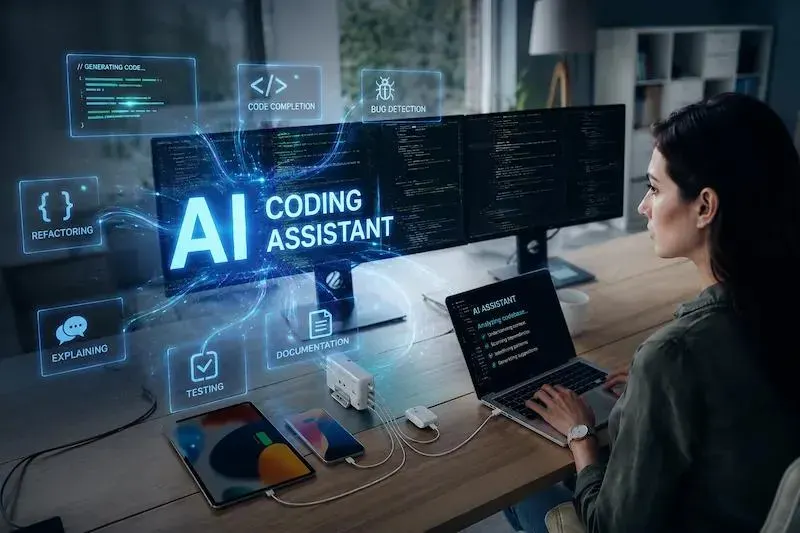
Software development remains one of the clearest use cases for advanced AI models. OpenAI says GPT-5.6 improves coding performance while using fewer tokens, which could reduce costs for businesses running large-scale AI-assisted engineering workflows.
Developers may use the new models for code generation, debugging, architecture review, documentation, and repetitive engineering tasks. The real value will depend on reliability, context handling, and how well the models perform inside existing development tools.
Safety and staged rollout
OpenAI says the GPT-5.6 family went through additional testing before release, with particular attention to higher-risk areas such as cybersecurity and scientific research.
That focus is important because more capable models can be used in more sensitive workflows. As AI agents gain the ability to interact with tools and systems, safety measures, monitoring, and user control become more important than they were for simple chatbots.
The AI market is getting more practical
The competition around AI is no longer only about which model scores highest on benchmarks. Businesses are asking more grounded questions: How much does it cost? Is it reliable? Can it connect to our tools? Can employees use it without creating security problems?
That shift is pushing companies like OpenAI, Anthropic, Google, Meta, and others to build complete platforms rather than isolated models.
What it means for businesses
For organizations, GPT-5.6 and ChatGPT Work point toward AI becoming part of normal operations. Teams could use assistants to draft documents, analyze internal information, prepare customer responses, support engineering work, or coordinate routine tasks.
The opportunity is large, but adoption will need careful planning. Businesses will need policies for data access, approvals, auditing, and when a human must stay in the loop.

Our take
GPT-5.6 is a major model release, but ChatGPT Work may matter more over time. The AI industry is shifting from impressive conversations toward useful action.
If OpenAI can make task automation reliable and easy to control, ChatGPT could become a standard workplace tool rather than a separate app people open only when they need a quick answer.
Frequently asked questions
What is GPT-5.6?
GPT-5.6 is OpenAI's latest AI model family, with versions optimized for advanced reasoning, balanced business use, and faster lower-cost workloads.
What is ChatGPT Work?
ChatGPT Work is an AI assistant designed to complete tasks across connected workplace apps and services.
Why does this release matter?
It shows OpenAI moving further toward AI agents that can handle practical workflows instead of only answering questions in a chat interface.